
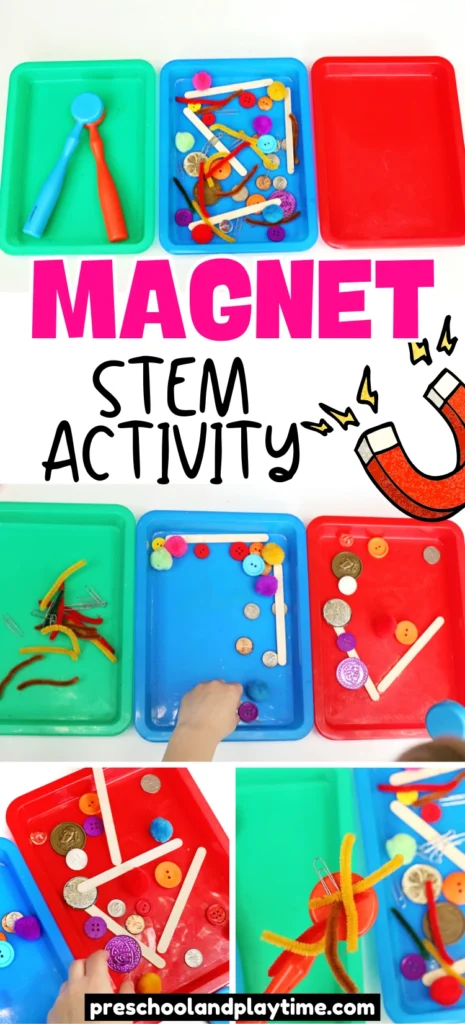
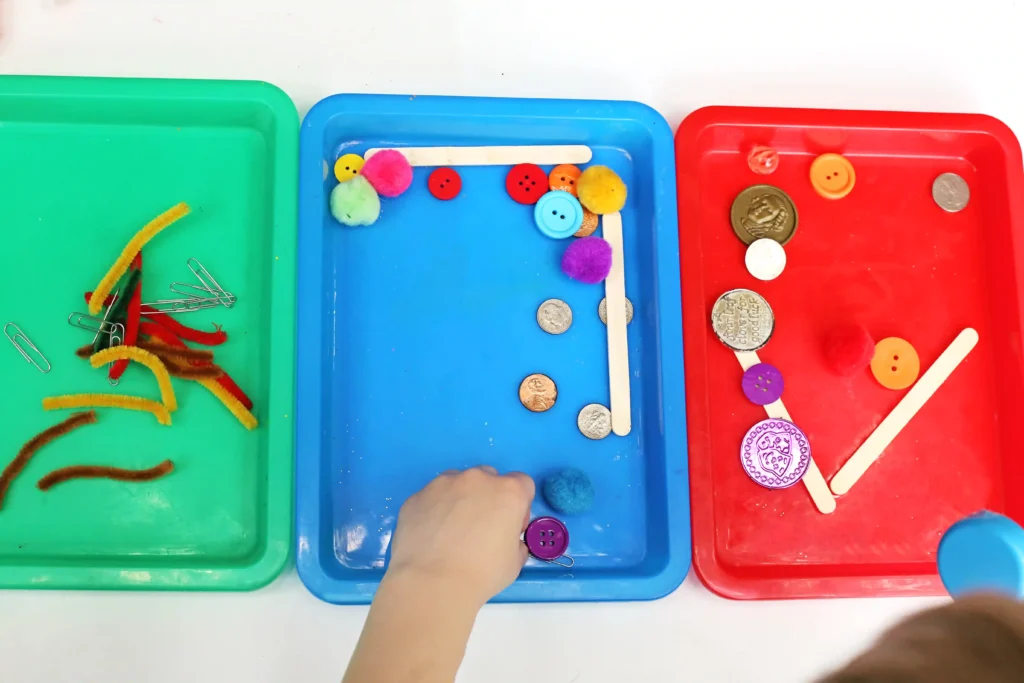
Introducing preschoolers to STEM learning doesn’t have to be difficult. Sometimes the simplest activities can spark the biggest curiosity! This magnetic sorting STEM activity uses everyday household items and a simple magnet to explore the fascinating concept of magnetism. As kids test different objects and sort them into “magnetic” and “non-magnetic” piles, they’re building early hands-on science skills, practicing prediction and observation, and strengthening fine motor control, all through playful exploration. It’s an easy, low-prep activity that fits perfectly into a preschool classroom, homeschool day, or a fun afternoon at home, and it’s a great way to show little learners that science can be hands-on, exciting, and fun from the very start.
This post may contain affiliate links, please read our disclosure policy for details.
STEM Books For Kids
ABCs of Engineering– A book that combines the alphabet and STEM learning? Yes, please! It truly is a book that grows with your child!
I Can Code: If/Then– Introduce your little computer scientist to the essential coding basics and turn their everyday world into an extraordinary learning adventure!
STEAM Play and Learn– Find 20 step-by-step STEAM projects for preschoolers including color mixing and potions!
What You’ll Need For This Magnetic Sorting STEM Activity
Join the List
Subscribe
How To Set Up A Magnetic Sorting STEM Activity
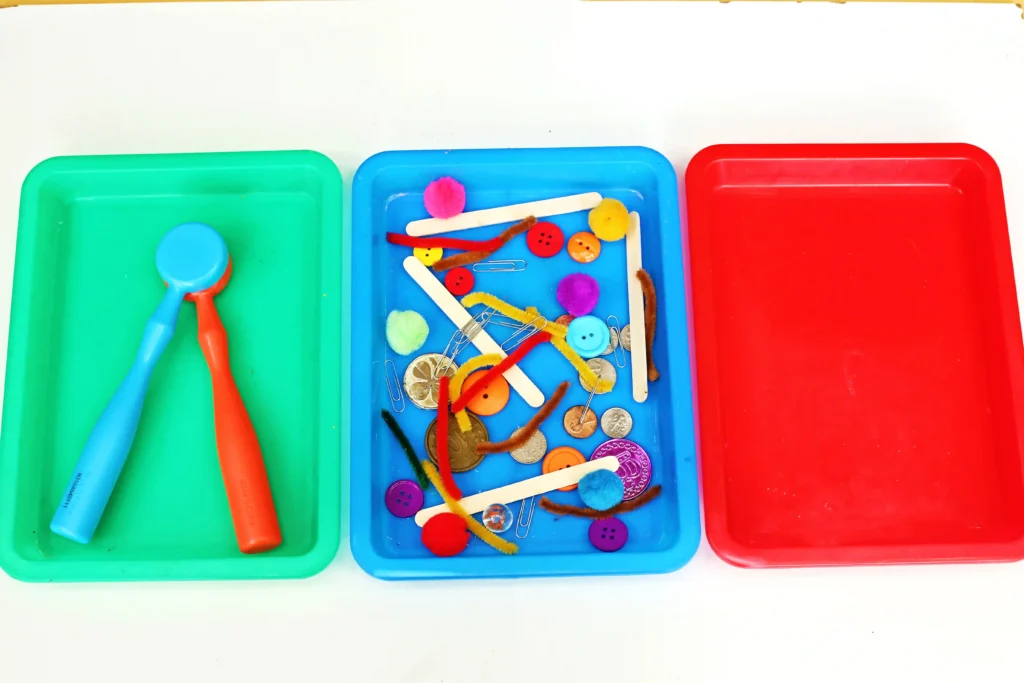
1. Fill one tray with a variety of objects made from different materials.
2. Place two empty trays or containers nearby.
3. Give your child a magnetic wand.
4. Invite them to predict whether each object will stick to the magnet before testing it.
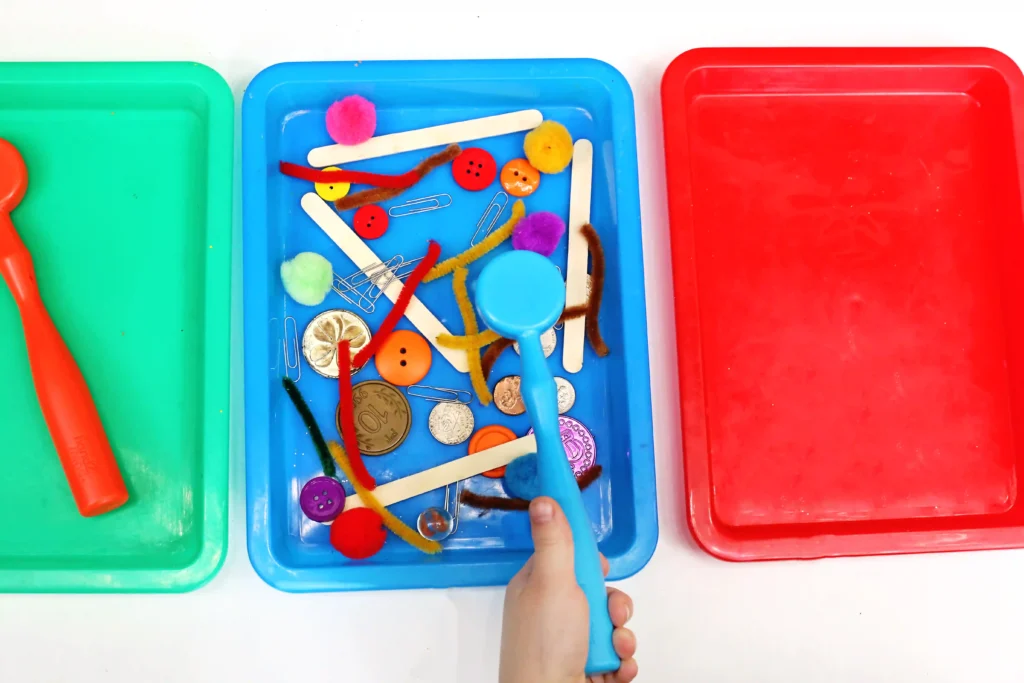
5. Use the magnetic wand to pick up the objects.
6. Sort each item into the correct tray based on whether it is attracted to the magnet.
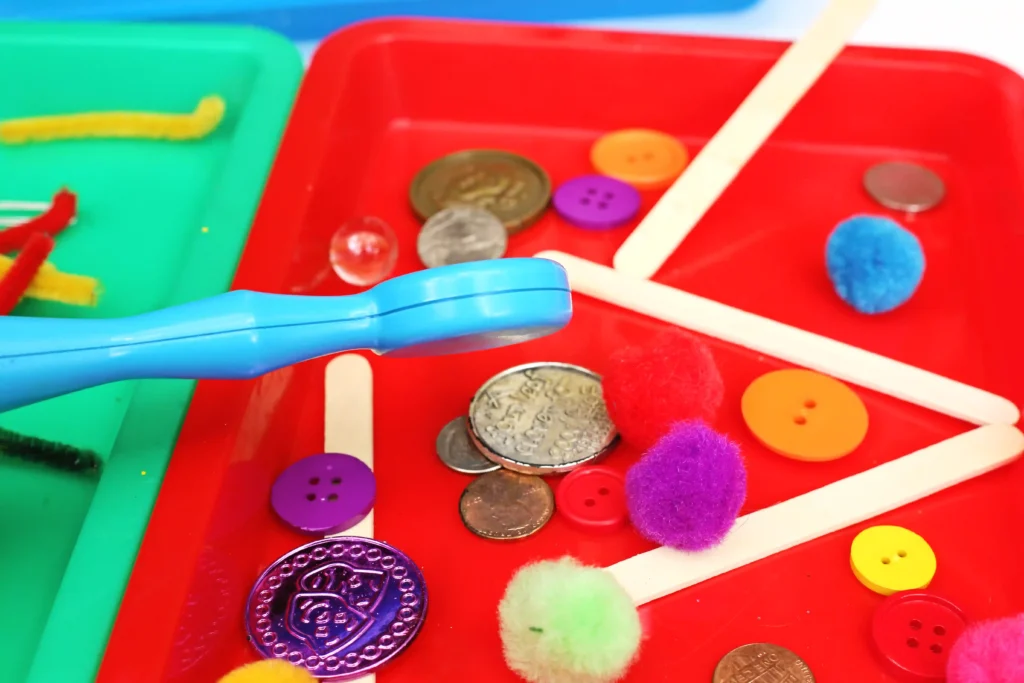
7. When finished, talk about the results. Ask questions like:
- Which objects were magnetic?
- What materials seemed to be attracted to the magnet?
- Were there any surprises?
8. For an extra challenge, encourage children to group the magnetic objects by size, shape, or material.
Benefits Of This STEM Activity
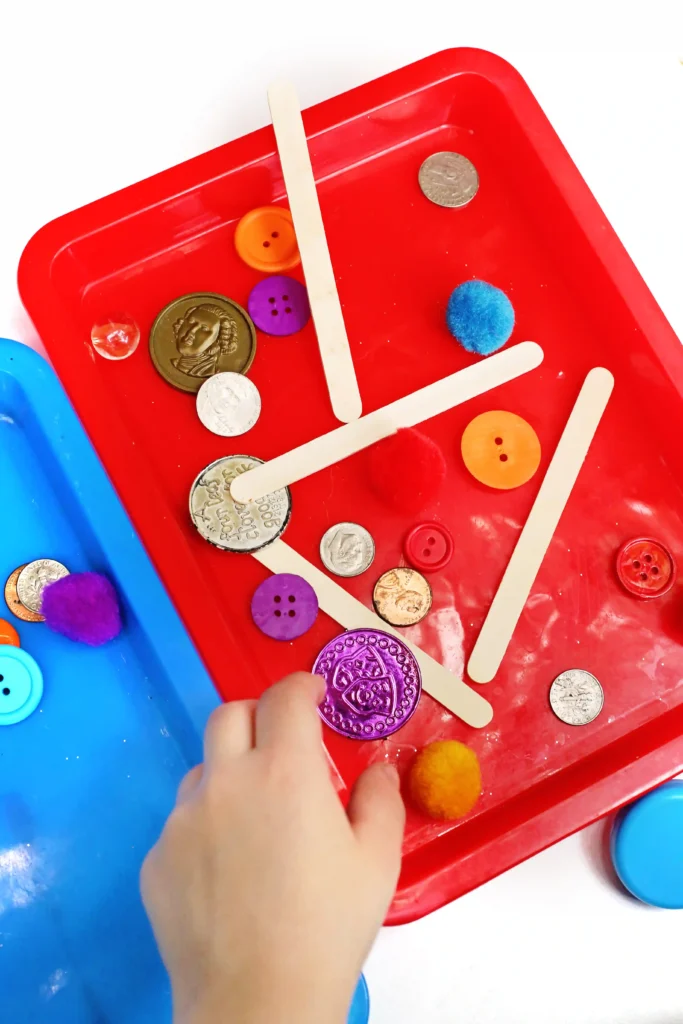
- Introduces basic STEM concepts through hands-on exploration.
- Develops observation, prediction, and problem-solving skills.
- Strengthens fine motor skills while using the magnetic wand.
- Encourages critical thinking as children compare and classify objects.
- Expands vocabulary with words like magnetic, nonmagnetic, metal, attract, and repel.
- Promotes curiosity and scientific inquiry by encouraging children to test their own ideas and make discoveries through play.
Activities For Preschoolers
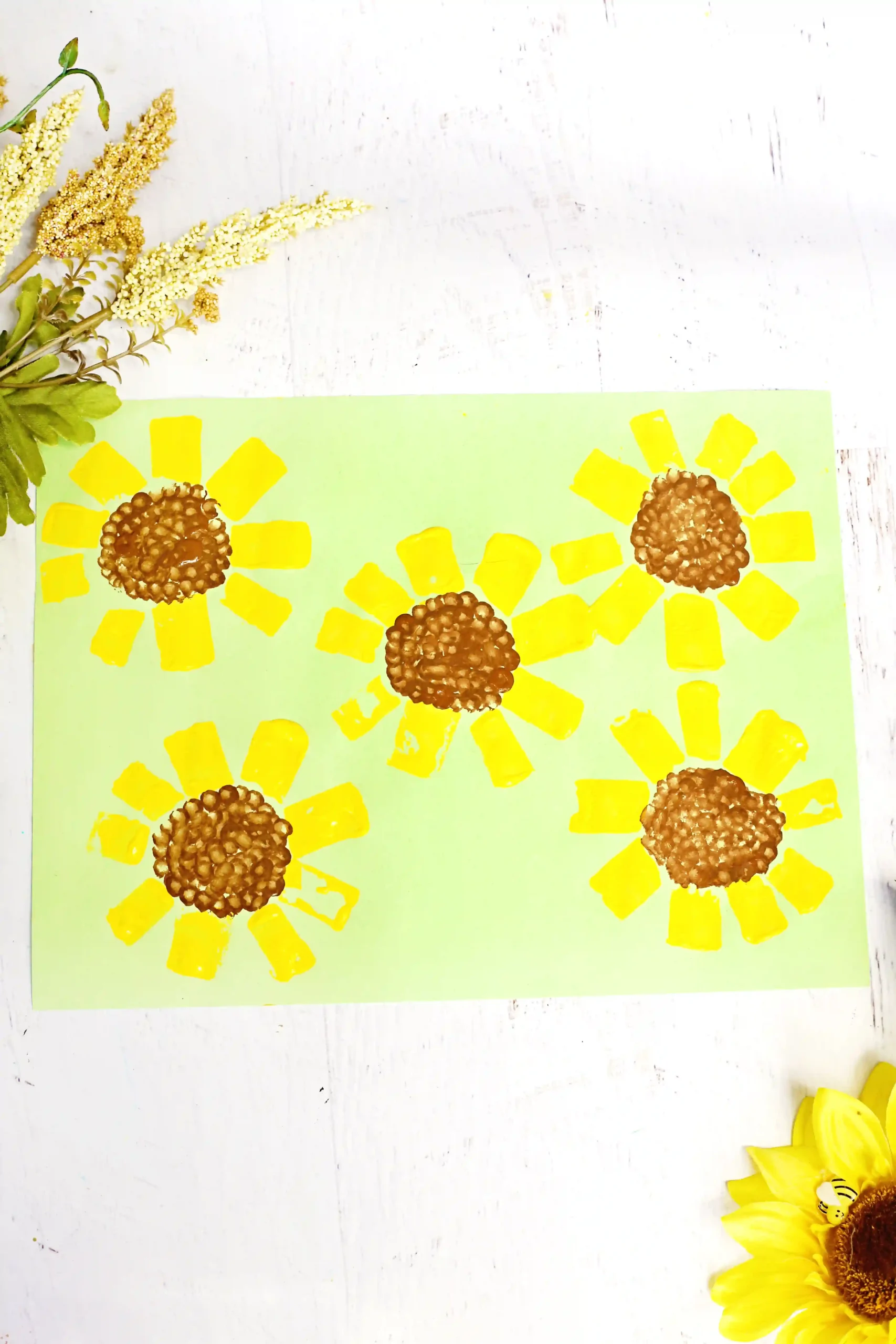
Toilet Paper Roll Sunflower Craft– There’s something magical about turning everyday recycling into a beautiful piece of art, and this toilet paper roll sunflower craft does exactly that! With just a few toilet paper rolls, some paint, and construction paper, kids can create a cheerful, vibrant sunflower that’s perfect for display.
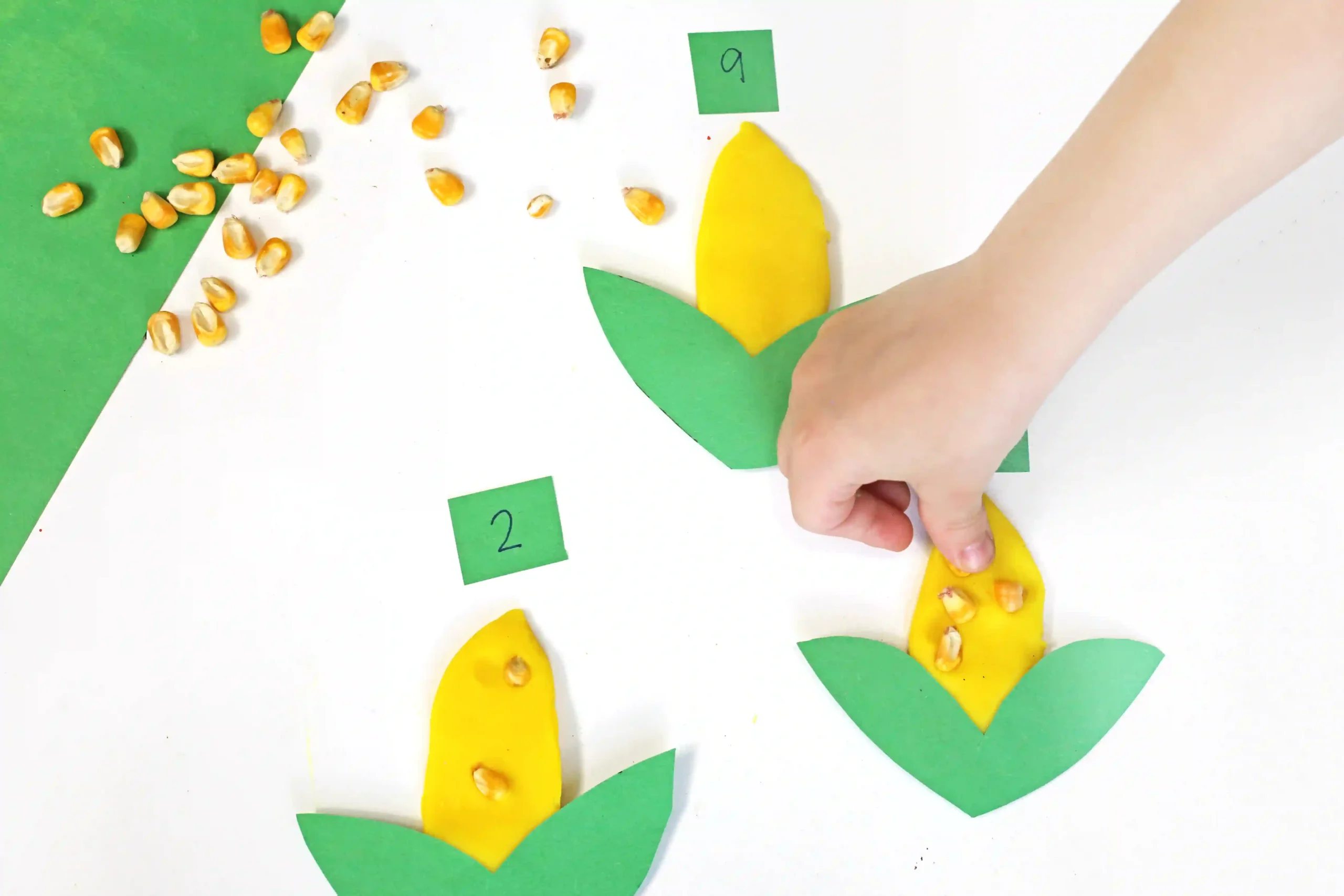
Math Corn Counting– Practicing counting to 10 with this fun math corn counting activity that uses construction paper, playdough, and corn kernels.
Magnetic Sorting STEM Activity
This magnetic sorting STEM activity is a fun, hands-on way for preschoolers to explore magnetism! Easy setup with simple household materials.
- Prep Time: 10
- Total Time: 10
- Category: DIY, STEM
- Method: Step-by-Step
Materials
- Magnetic wand or horseshoe magnet
- Three trays or bowls
- Assorted objects such as:
- Paper clips
- Buttons
- Craft sticks
- Pipe cleaners (with wire inside)
- Pom-poms
- Coins
- Plastic items
- Wooden items
Instructions
- Fill one tray with a variety of objects made from different materials.
- Place two empty trays or containers nearby.
- Give your child a magnetic wand.
- Invite them to predict whether each object will stick to the magnet before testing it.
- Use the magnetic wand to pick up the objects.
- Sort each item into the correct tray based on whether it is attracted to the magnet.
- When finished, talk about the results. Ask questions like:
- Which objects were magnetic?
- What materials seemed to be attracted to the magnet?
- Were there any surprises?
- For an extra challenge, encourage children to group the magnetic objects by size, shape, or material.